
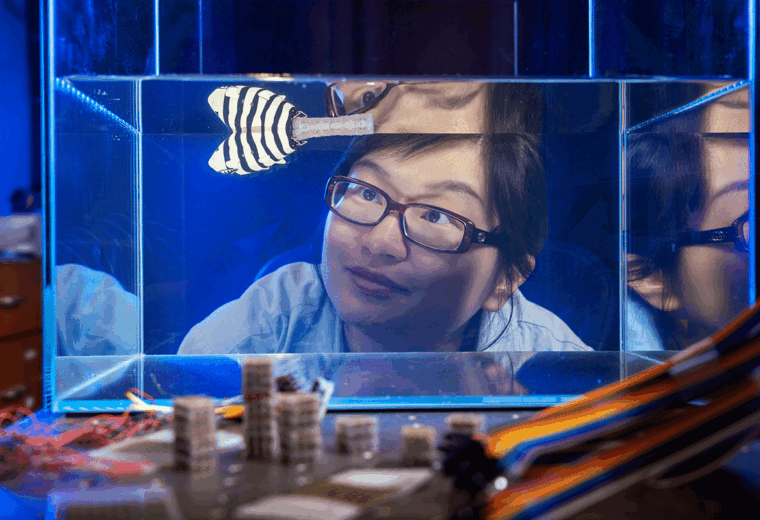
Programmable Lego-Like Material Emulates Life’s Flexibility
Electrically heated elements turn from solids to liquids to provide flexibility to robotic building blocks.
Electrically heated elements turn from solids to liquids to provide flexibility to robotic building blocks.

New AI system analyzes data to help scientists understand complex systems that change over time.

Duke’s investment in state-of-the-art research tools empower scientists and engineers to uncover microscopic insights about everything from electronics to medicine.

Household robots and AI assistants illustrate how personality can make technology more approachable, while also amplifying ethical dilemmas.

New wearable device technology continuously monitors skin and tissue stiffness to provide real-time medical and athletic insights.

From forest-traversing robot dogs to AI-native workers, Boyuan Chen's advances in artificial general intelligence are blurring the lines between science fiction and reality.

Duke’s Artificial Intelligence for Materials (aiM) program trains graduate students to use AI to accelerate materials discovery.
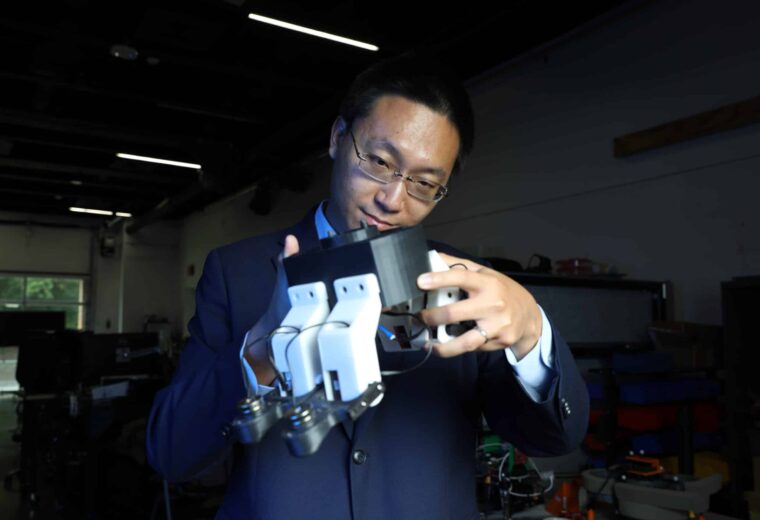
Chen’s research focuses on developing full-stack robotics that includes the mechanical structures as well as its AI-based software.

Volker Blum helps a team of researchers gain fundamental insights into designing materials that allow exotic quantum states at high temperatures.
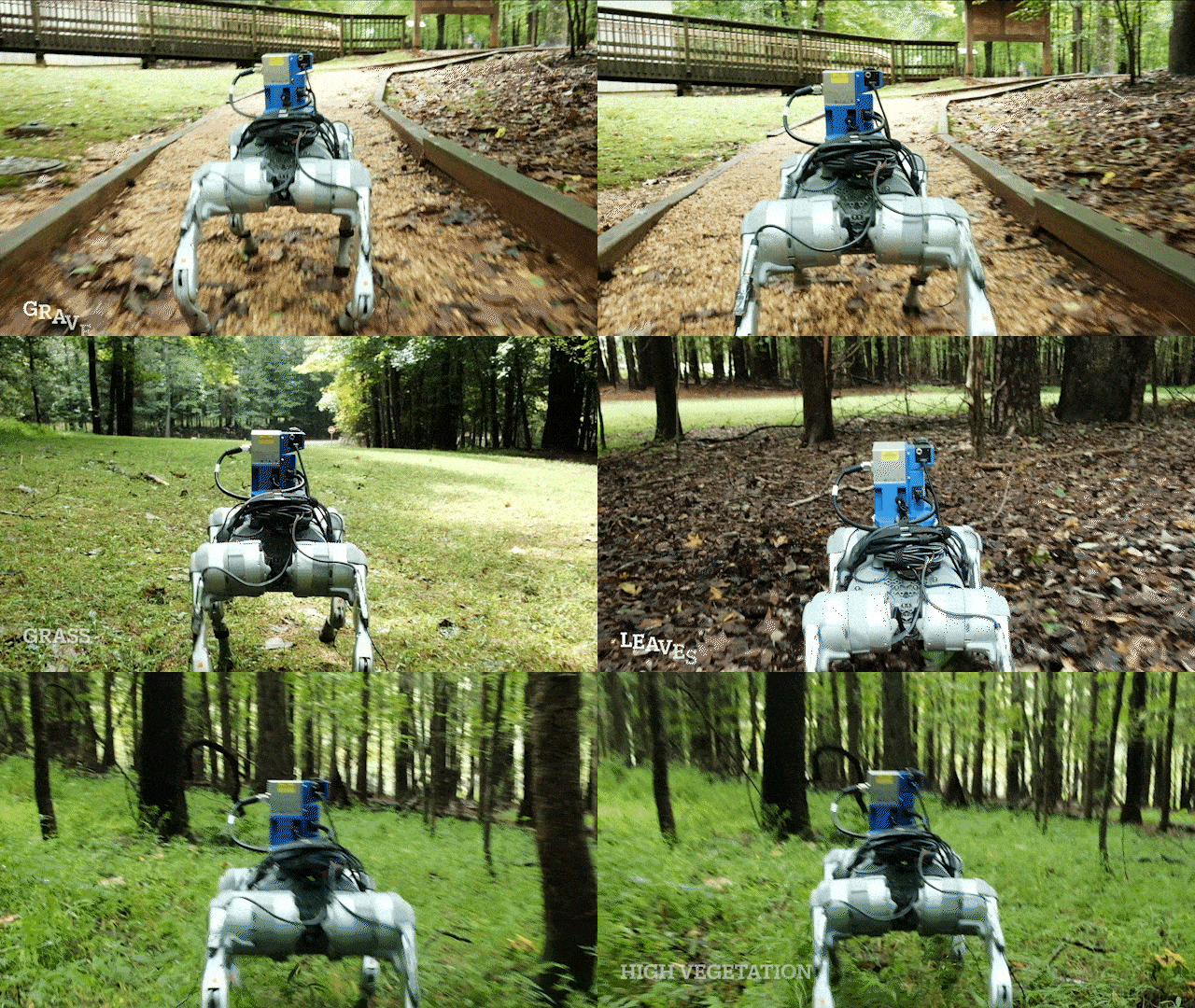
A new Duke-developed AI system fuses vision, vibrations, touch and its own body states to help robots understand and move through difficult in-the-wild environments.

Boyuan Chen's General Robotics Lab is just one group using the opportunities that Duke Forest provides to design, test and train drones.

Incorporating weak bonds that lay the groundwork for new networks allows tougher double-network hydrogels that recover from damage